Everyday Objects as Digital Gateways: How Familiar Things Shape Digital Experiences
- July 30, 2026
TL; DR
What if the most intuitive digital interface wasn't a touchscreen, but the marker already in your hand? As technology becomes increasingly embedded into everyday life, the future of human-machine interaction is shifting away from visible screens and complex controls toward familiar physical objects. By transforming ordinary tools into digital gateways, organizations can dramatically reduce learning curves, increase adoption, improve collaboration, and create experiences that feel more natural and more human.
From Interfaces to Interactions: Why Familiarity Matters More Than Ever
For decades, digital innovation has followed a predictable path: introduce a new technology, ask users to learn it, and hope adoption follows. Touchscreens replaced keyboards, gesture controls replaced buttons, and voice assistants promised to eliminate interfaces altogether. Yet despite impressive technological progress, one challenge remains remarkably constant: people naturally prefer tools they already understand.
Whether in classrooms, meeting rooms, creative studios, manufacturing environments, or homes, successful technology is rarely the most advanced—it is the one that feels invisible. The next evolution of digital experiences is therefore not about inventing entirely new ways to interact with technology, but about allowing technology to disappear behind familiar everyday gestures.
This philosophy is increasingly reflected across human-computer interaction research and aligns closely with the principles described by Don Norman in The Design of Everyday Things, where intuitive design is defined by reducing the mental effort required to understand and operate a system.
Why Humans Trust Familiar Objects More Than New Interfaces
Our brains are optimized for familiarity, not novelty
Every interaction with technology requires cognitive effort. Learning new gestures, adapting to proprietary devices, remembering digital workflows, or switching between physical and digital tools all create what psychologists describe as extraneous cognitive load. Even small frictions accumulate over time, reducing productivity, increasing errors, and ultimately discouraging long-term adoption.
Conversely, familiar objects leverage years—or even decades—of deeply ingrained motor memory. Picking up a marker, turning a knob, moving a toy across a surface, or writing with a pen requires virtually no conscious thought. These actions are automatic, allowing people to focus on solving problems instead of learning interfaces.
This concept is closely related to the theory of the Extended Mind, introduced by Clark and Chalmers in The Extended Mind. Their work argues that tools become extensions of human cognition. Rather than existing outside our thinking process, familiar objects actively participate in it. When digital technology integrates naturally into these existing tools instead of replacing them, interaction becomes almost effortless.
AMI explores this same philosophy in Markers over Mice: The Enduring Power of Familiar Tools, showing how preserving natural gestures removes barriers between human intention and digital action.
Familiarity dramatically improves technology adoption
One of the most underestimated challenges in digital transformation is not technological capability—it is user adoption.
Organizations invest millions in collaborative software, digital workspaces, interactive displays, and productivity platforms, yet many initiatives fail because employees simply continue using methods they already know. The hidden cost is not hardware—it is behavioral change.
Asana describes this phenomenon as one of the largest "hidden productivity taxes" affecting modern organizations The Hidden Productivity Taxes. Every additional click, application, login, interface, or workflow creates friction that compounds throughout the working day.
Similarly, Grammarly's State of Business Communication highlights how inefficient communication tools contribute to lost productivity, misunderstandings, and increased cognitive burden across organizations.
Rather than asking users to adapt to technology, the most successful digital products adapt technology to users. Familiar objects reduce onboarding requirements, shorten training periods, increase confidence, and encourage immediate engagement.
AMI's article Friction Is the Enemy: Why Simplicity Drives Adoption in Hybrid Collaboration explains why eliminating unnecessary complexity often delivers greater business value than adding new features.
The emotional value of everyday tools should not be underestimated
Digital interfaces are often designed for efficiency, but humans do not interact with technology purely through logic. Emotion, habit, tactile sensation, and personal experience all influence how people engage with tools.
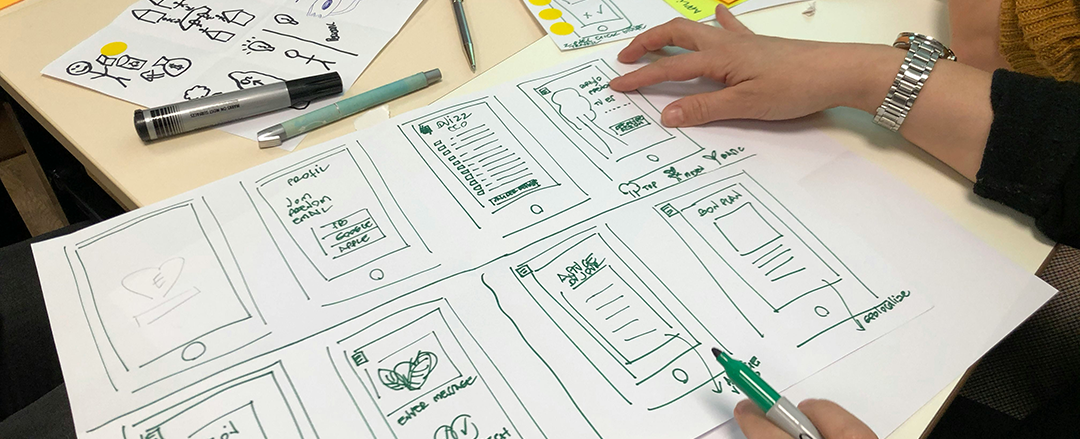
Writing with a favorite marker, sketching ideas on a whiteboard, arranging physical objects on a tabletop, or manipulating educational materials provides sensory feedback that digital interfaces rarely reproduce. These physical interactions encourage creativity, memory formation, collaboration, and engagement.
Numerous studies on handwriting demonstrate that manual writing activates broader neural networks than typing, supporting deeper learning and stronger memory retention. AMI explores these benefits in several articles, including Handwriting in EdTech: Why It Still Matters Today, The Joy of Writing by Hand—and Why Businesses Should Care, and Why Handwriting Unlocks Memory, Creativity and Team Participation in Hybrid Work.
The lesson extends far beyond handwriting itself. The more technology respects familiar behaviors instead of replacing them, the more naturally people adopt it. Digital transformation becomes less about teaching new habits and more about enhancing existing ones—a principle increasingly recognized across human-centered design, educational research, and workplace innovation.

How Everyday Objects Become Intelligent Digital Gateways
Invisible technology lets familiar objects stay familiar
The best technology often goes unnoticed. Electricity powers our buildings without demanding attention, wireless networks connect billions of devices invisibly, and increasingly, digital interaction itself is following the same path. Instead of placing another screen, controller, or sensor between people and their ideas, the next generation of human-machine interaction embeds intelligence directly into the objects people already use every day.
This shift is part of a broader movement toward Invisible Interfaces—systems that disappear into the background while enabling richer digital experiences. Rather than asking users to learn new gestures or adapt to unfamiliar hardware, invisible interfaces preserve existing behaviors and simply make them digitally connected.
Research in Human-Computer Interaction has long suggested that reducing the visibility of technology can improve usability by allowing people to focus on their task rather than on the interface itself. Tangible User Interfaces (TUIs), smart environments, and ubiquitous computing all explore this idea by transforming ordinary physical objects into digital interaction points.
AMI discusses this evolution in Invisible Interfaces: The Next Tech Shift for Workspaces and Invisible by Design: How Magnetic Sensing Redefines Human-Machine Interaction, illustrating how technology can augment familiar objects without altering the experience users already know.
Digital experiences become more human when interaction feels natural
The ultimate goal of intelligent interfaces is not technological sophistication—it is creating experiences that feel intuitive enough to disappear.
People think through gestures. They sketch ideas before organizing them. They move objects to understand relationships. They point, erase, annotate, and rearrange information naturally. These physical actions are deeply embedded in human cognition and collaborative behavior.
When digital systems recognize these actions directly, they preserve the fluidity of human thinking instead of interrupting it with menus, toolbars, mode switches, or interface complexity. Technology becomes an invisible companion rather than an obstacle.
This perspective aligns closely with AMI's article Beyond Screens: How Human Expression Enhances Digital Collaboration, which argues that the most effective digital experiences amplify natural human expression instead of replacing it. The objective is not to digitize every interaction, but to ensure that digital capabilities enhance the spontaneity, creativity, and collaboration already present in physical environments.
Ultimately, familiar objects become gateways not because they are technologically advanced, but because they allow people to remain focused on what truly matters: communicating ideas, solving problems, and creating together.

Why Everyday Digital Objects Matter Across Every Industry
Hybrid work demands interfaces people already know
Hybrid work has fundamentally changed how organizations collaborate. Teams now move continuously between physical meeting rooms and digital collaboration platforms, expecting information to flow seamlessly across both environments.
Yet many workplaces still force employees to choose between the flexibility of traditional whiteboards and the connectivity of digital collaboration tools. This disconnect contributes to what Microsoft and Harvard Business Review have identified as one of the greatest challenges of hybrid work: ensuring equitable participation for both in-room and remote attendees.
Microsoft's guidance on hybrid meetings emphasizes that successful collaboration depends on enabling every participant to contribute naturally, regardless of location. Gensler similarly highlights that workplace design should reduce barriers to participation rather than introduce new ones.
Instead of asking teams to abandon familiar collaborative tools, digital interfaces built around everyday objects preserve existing workflows while extending them into hybrid environments.
Education benefits when technology adapts to learners
The same principles extend naturally into education. Teachers have relied on handwriting, physical manipulation, and visual explanation for generations—not because these methods are old, but because they align with how people learn.
Research consistently shows that handwriting supports deeper processing, stronger memory formation, and improved conceptual understanding compared with typing alone. Digital tools that preserve these familiar learning behaviors can therefore enrich education without disrupting established teaching practices.
This is especially important because many educational technologies fail not due to insufficient functionality, but because they require teachers and students to change successful classroom routines.
When markers, manipulatives, educational toys, or laboratory equipment become digital interfaces, teachers gain richer learning analytics while students continue interacting through familiar physical experiences. Technology supports pedagogy instead of dictating it.
Privacy and trust become built into the interaction
As digital experiences become increasingly embedded into everyday environments, privacy is no longer simply a regulatory requirement—it is becoming a fundamental design principle.
Many interaction systems depend on cameras, microphones, or continuous visual monitoring to interpret user behavior. While effective in certain contexts, these approaches can introduce concerns related to surveillance, data collection, and user trust, particularly in workplaces, classrooms, healthcare settings, and public environments.
By contrast, sensing technologies that operate without capturing visual identity offer an alternative path. The European concept of Data Protection by Design, promoted by the CNIL, encourages organizations to integrate privacy directly into the architecture of digital systems rather than treating it as an afterthought. Similar principles are reflected in NIST's privacy engineering guidance and broader cybersecurity frameworks.

The Future of Digital Interaction Starts with Familiar Objects
Businesses gain more when technology adapts to people
Organizations often evaluate new technologies through the lens of features, performance, or return on investment. Yet one of the strongest predictors of success is far simpler: will people actually use it?
History repeatedly shows that even the most innovative systems struggle when they require users to abandon deeply rooted habits. Every additional training session, proprietary accessory, software workflow, or interface increases resistance to change. Conversely, technologies that fit naturally into existing behaviors are adopted faster, generate greater engagement, and deliver value sooner.
McKinsey estimates that collaboration is one of the most significant drivers of organizational performance, while ineffective communication continues to consume valuable time and resources (Mapping the Value of Employee Collaboration). Similarly, recent research highlights that many organizations remain overwhelmed by fragmented workflows and excessive digital complexity rather than a lack of technology itself (If We're All So Busy, Why Isn't Anything Getting Done? .
The implication is clear: successful digital transformation is increasingly about removing friction, not adding features. Familiar objects reduce the cognitive effort required to interact with digital systems, allowing users to concentrate on ideas, decisions, and collaboration instead of interfaces.
AMI explores this business perspective in Bad Tools, Bad Decisions: How Inefficient Communication Impacts Business Performance, demonstrating how intuitive interaction directly contributes to better teamwork and organizational outcomes.
The next generation of interfaces will be almost invisible
Looking ahead, the future of human-machine interaction is unlikely to be defined by more screens or increasingly complex devices. Instead, it points toward environments where digital intelligence is seamlessly integrated into the physical world.
Research in ubiquitous computing, tangible interaction, ambient intelligence, and human-centered design all converge toward the same direction: technology should recede into the background, allowing people to interact through natural movements, familiar tools, and meaningful physical experiences.
In this future, the distinction between "digital" and "physical" gradually disappears. A marker is no longer simply a marker. A tabletop becomes collaborative. A toy becomes interactive. A control knob becomes connected. A writing surface becomes a live communication platform. Yet from the user's perspective, nothing feels unfamiliar. The object remains exactly what it has always been—only more capable.
This evolution reflects a broader shift in digital innovation: the most successful interfaces will increasingly be the ones users never perceive as interfaces at all.

Conclusion — AMI's Vision: Enhancing Everyday Objects, Not Replacing Them
At Advanced Magnetic Interaction (AMI), we believe the future of digital interaction begins with a simple idea: technology should adapt to people—not the other way around.
For decades, digital innovation has often required users to learn new devices, adopt unfamiliar workflows, or abandon the physical tools they trust. AMI takes a different approach. Through invisible magnetic sensing technology, we transform familiar everyday objects into intelligent digital gateways while preserving the gestures, habits, and experiences that already feel natural.
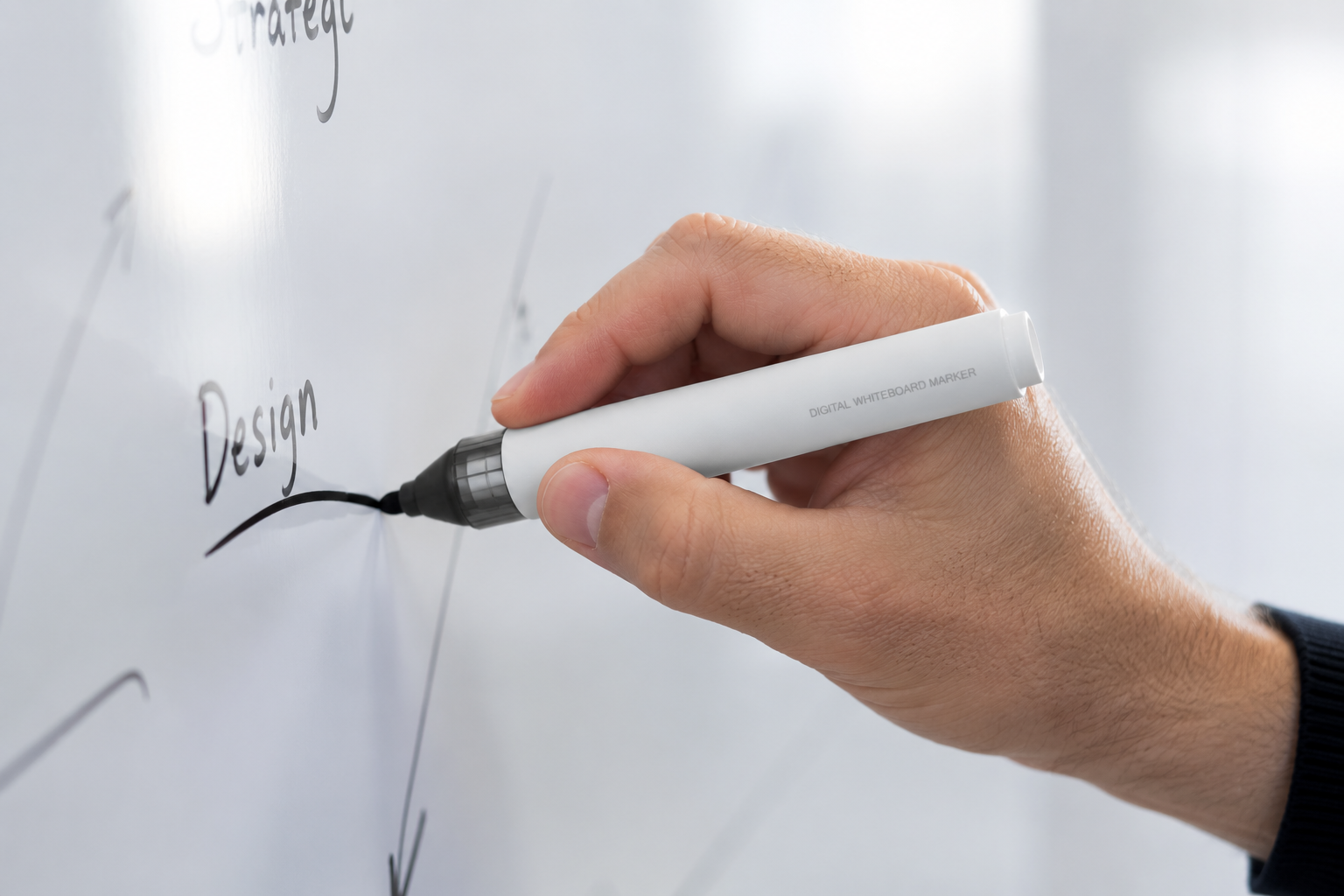
Whether it is a dry-erase marker becoming a digital writing instrument, a collaborative whiteboard connecting hybrid teams, an educational object enriching classroom learning, or a product integrating seamless interaction without visible electronics, the principle remains the same: keep the object familiar, make the experience smarter.
This vision extends beyond a single application or industry. It enables manufacturers, workspace designers, education technology providers, furniture companies, consumer electronics brands, and industrial innovators to create products that combine the best of both worlds: the simplicity of the physical and the power of the digital.
As digital experiences become increasingly embedded into everyday life, familiarity is no longer a limitation—it is becoming one of technology's greatest strengths. The most meaningful innovations may not ask people to change how they interact with the world. Instead, they will quietly transform the objects already in their hands into natural gateways between human creativity and digital possibility.

Frequently Asked Questions (FAQ)
What is an everyday object digital interface?
An everyday object digital interface is a familiar physical object—such as a marker, toy, knob, stylus, or writing surface—that can communicate with digital systems without changing how users naturally interact with it.
Why are familiar objects better digital interfaces?
Familiar objects reduce cognitive load because users already know how to use them. This lowers training requirements, accelerates adoption, improves productivity, and creates more intuitive digital experiences.
What is an invisible interface?
An invisible interface is a technology that operates in the background without requiring visible controls or complex interactions. Instead of focusing on the technology itself, users simply interact naturally with everyday objects.
How does magnetic sensing enable everyday object interaction?
Magnetic sensing detects specially equipped objects with high precision through magnetic fields rather than cameras or optical tracking. This enables natural interaction while preserving privacy, robustness, and flexibility across many environments.
Which industries can benefit from everyday object interfaces?
Applications span collaborative workspaces, education, office furniture, consumer electronics, industrial equipment, healthcare, gaming, retail, museums, smart environments, and many other sectors where physical interaction already exists.
Why is familiarity important for digital transformation?
Organizations often struggle with user adoption when introducing new technologies. Familiar interfaces reduce resistance to change because they build upon existing behaviors instead of replacing them, making digital transformation more successful.
Are invisible interfaces more privacy-friendly?
They can be. Technologies such as magnetic sensing do not require continuous image capture or facial recognition, making them particularly well suited for environments where privacy and trust are essential
How is AMI transforming everyday objects into digital gateways?
AMI's magnetic sensing technology enables manufacturers to integrate invisible digital interaction into existing products—from whiteboards and educational tools to collaborative furniture and other everyday objects—allowing users to interact naturally while benefiting from real-time digital capabilities.