Markers Over Mice: The Enduring Power of Familiar Tools
Grenoble - January 22, 2026
TL;DR
Markers, pens, and pencils remain powerful because they require no training
Familiar tools lower barriers to participation and increase adoption
Analog input supports creativity, inclusivity, and authentic expression
Digital transformation succeeds when it builds on natural human behavior
The future of collaboration is digital—but grounded in analog comfort
Technology continues to evolve at an extraordinary pace. Interfaces become smarter, screens sharper, and software more powerful. Yet in classrooms, meeting rooms, studios, and offices, one thing remains constant: people still reach for markers, pens, and pencils.
This persistence is not nostalgia. It reflects something deeper about how humans think, communicate, and collaborate.
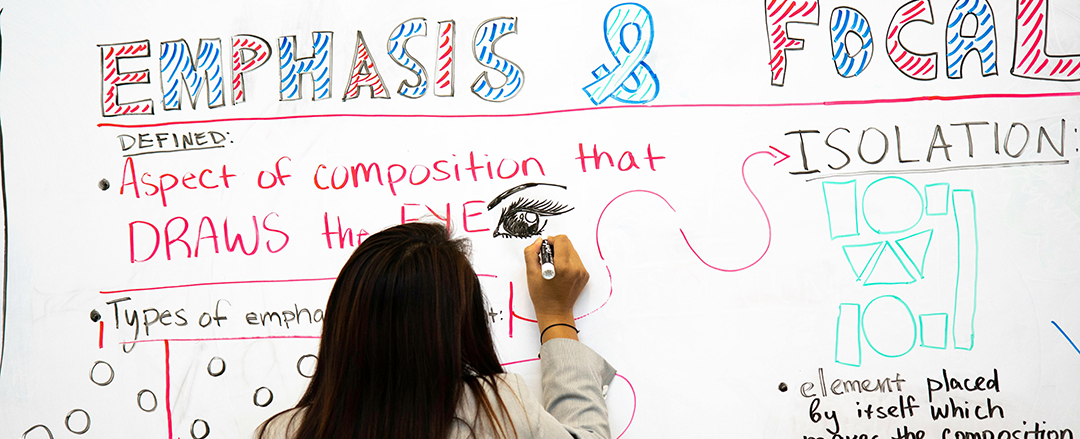
Markers endure because they are immediately usable. They require no instructions, no onboarding, and no explanation. The moment a marker touches a surface, ideas become visible.
No Training, No Friction: The Hidden Advantage of Analog Tools

Lower barriers mean higher participation
One of the most overlooked challenges of digital transformation is adoption. Gartner research consistently shows that technologies often fail to deliver expected value not because of missing features, but because users face adoption barriers and engagement friction.
Markers remove that friction entirely. Everyone knows how to use them. There is no learning curve, no fear of “doing it wrong,” and no dependency on technical confidence.
This simplicity creates more inclusive environments, where participation is driven by ideas—not by comfort with technology.
Familiar gestures support natural thinking
Writing and drawing by hand engage cognitive and motor behaviors that digital interfaces do not yet fully replicate. Research from Microsoft Research, including the As We May Ink? project, highlights differences in experiences between analog pens and their digital counterparts, suggesting there are unique qualities in pen-and-ink interactions that support early-stage thinking and creative expression.
The value of analog tools lies in their directness. There is no interface between intention and action. Thought flows directly into form.
This is why markers remain central to brainstorming, teaching, problem-solving, and sense-making—even in highly digital environments.
Creativity Thrives Where Tools Get Out of the Way

Authentic expression over polished input
Digital tools often encourage precision, structure, and finality. Analog tools encourage exploration, messiness, and iteration. A rough sketch, a crossed-out idea, or an unfinished thought is not a failure—it is part of the creative process.
Studies cited by Harvard Business Review highlight that visual thinking and sketching improve shared understanding and creative confidence in teams. People are more willing to contribute when the medium feels forgiving.
Markers preserve the authenticity of expression. They make it acceptable to think out loud.
Why analog tools feel more inclusive
Not everyone interacts with digital tools in the same way. Touchscreens, styluses, and software interfaces often privilege specific skill sets or habits.
Markers, on the other hand, are universal. They work across cultures, ages, roles, and abilities. In both education and corporate environments, this universality fosters collaboration equity—everyone can participate, immediately and visibly.
This is one reason why markers often outperform mice, styluses, and complex interfaces when the goal is collective ideation rather than individual execution.
Digital Transformation Works Best When It Builds on Analog Comfort
Analog and digital are not opposites
The mistake in many digital initiatives is treating analog and digital as competing paradigms. In reality, they serve different roles.
Analog tools excel at:
idea generation
sense-making
shared understanding
Digital systems excel at:
distribution
storage
scalability
The most effective collaboration environments connect these strengths rather than forcing one to replace the other.
From classrooms to boardrooms: the same pattern emerges
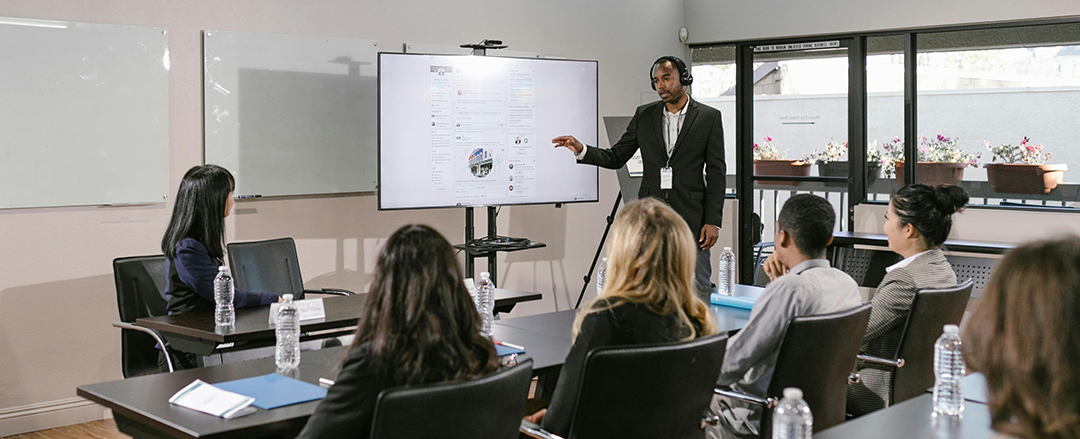
Whether in education or enterprise settings, the pattern is consistent. When people are given familiar tools to express ideas—and those ideas can seamlessly flow into digital systems—engagement increases.
This aligns with findings from Steelcase, which emphasize that high-performing collaboration spaces are designed to support a range of physical and digital experiences, enabling multiple modes of interaction.
The lesson is clear: digital collaboration succeeds when it respects how people already work.
Reimagining the Future of Collaboration
The future of digital collaboration will not be built on screens alone. It will be built on environments that feel intuitive, human, and inclusive.
Markers are not a fallback. They are a foundation.
By designing digital systems that start with familiar gestures—writing, drawing, pointing—we reduce barriers to entry, accelerate adoption, and preserve the authenticity of human expression.
In a world full of advanced technology, the most powerful tools may still be the simplest ones.
How AMI Fits Into This Philosophy
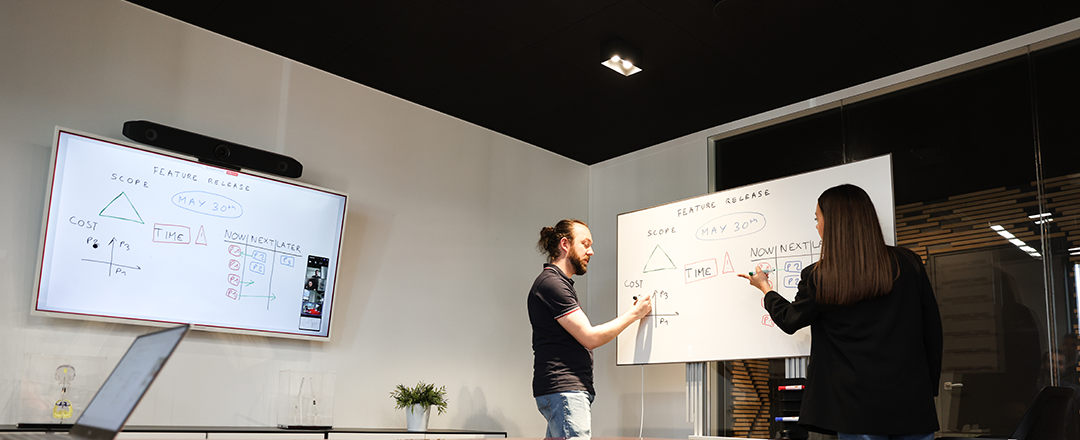 AMI (Advanced Magnetic Interaction) is rooted in this belief: digital collaboration works best when it starts with analog comfort.
By enabling familiar marker-based interaction to connect seamlessly with digital workflows, AMI helps organizations build collaboration environments that feel natural from the first touch—without asking users to change how they think or work.
Technology doesn’t need to replace the marker. It just needs to listen to it.
FAQ: Familiar Tools and Digital Collaboration
Why do markers still matter in digital collaboration?
Because they remove friction. Familiar tools lower the psychological and technical barriers to participation, making collaboration more inclusive and spontaneous.
Are analog tools outdated in modern workspaces?
No. Research shows they remain essential for ideation, creativity, and shared understanding—especially when paired with digital systems.
Do markers outperform digital input devices?
In many collaborative scenarios, yes. For inclusivity, speed, and ease of use, markers often outperform mice, styluses, and touchscreens.
How do analog tools support digital transformation?
They accelerate adoption by aligning technology with natural human behavior rather than forcing new interaction patterns.
Is analog-first compatible with modern collaboration platforms?
Absolutely. The most effective environments use analog tools for expression and digital platforms for sharing, continuity, and scale.