
The Joy of Writing by Hand — And Why Businesses Should Care
Grenoble - January 27, 2026
TL;DR: Why handwriting at work is worth bringing back
Handwriting slows thinking down in a good way, which improves clarity and prioritization.
Studies link handwriting to stronger memory and learning retention than typing.
Hybrid teams need tools that make sketching and ideation equally visible for remote and in-room participants.
The sweet spot is analog-to-digital: natural ink capture with cloud sharing and governance.
When ink is easy to capture, teams adopt it fast for decisions, action tracking, brainstorming, and training.
Why handwriting at work improves focus, recall, and decision-making

Why writing by hand feels different (and why that matters at work)
In a workplace where everything is optimized for speed, handwriting can feel almost radical. Pen-and-paper note-taking slows you down just enough to think, prioritize, and choose words—rather than transcribing. That “friction” is not a flaw: it’s cognitive engagement. For many knowledge workers, handwriting creates mental clarity because ideas become visible, spatial, and personal. Compared with typing, it often encourages reflection and creative thinking, making it useful for ideation, planning, and decision-making. The business takeaway is simple: when the goal is understanding—not volume—handwriting is often the better input method.
Handwriting and the brain: what research says about memory and learning
Scientific work repeatedly links handwriting to stronger recall and learning retention than keyboard-first capture. A clear business implication: the tool you use to write can influence how well you understand and remember information after meetings, training, or onboarding. In a 2024 study in Frontiers in Psychology (Van der Weel & Van der Meer, NTNU, Norway), handwriting with a stylus produced more widespread brain connectivity than typewriting, measured with high-density EEG (256 channels). 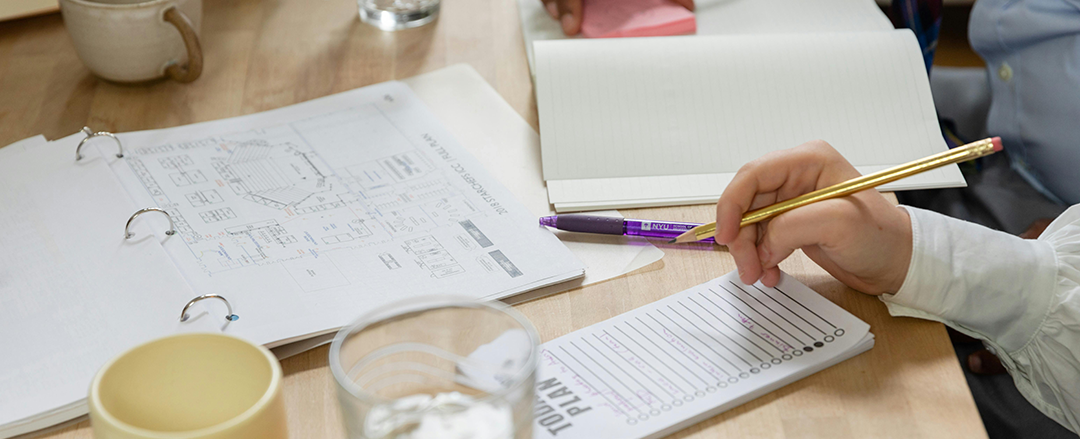
With 36 usable participants, the researchers found 32 significant clusters (16 significant connections), especially in theta (3.5–7.5 Hz) and alpha (8–12.5 Hz) bands—patterns associated with memory of work, novelty processing, and long-term memory performance. The effect emerged about 1,000–2,000 ms after task start and persisted during the trial—supporting the idea that handwriting is a “brain-connected” mode. In practical terms, handwriting can help employees leave a session with knowledge that actually sticks.
For a broader, practical overview of why handwriting still matters in the digital age, see Benefits of Handwriting.
Handwriting also supports literacy learning and recognition accuracy, which matters when employees must learn new terminology, product names, or process language. Research on the effects of handwriting experience on literacy learning highlights measurable improvements in letter learning and recognition across structured sessions, reinforcing that the act of writing shapes how we encode symbols and meaning over time: The Effects of Handwriting Experience on Literacy Learning. If your workforce needs to absorb new language quickly, handwriting is a surprisingly effective accelerator.
Does handwriting improve focus and productivity vs typing?
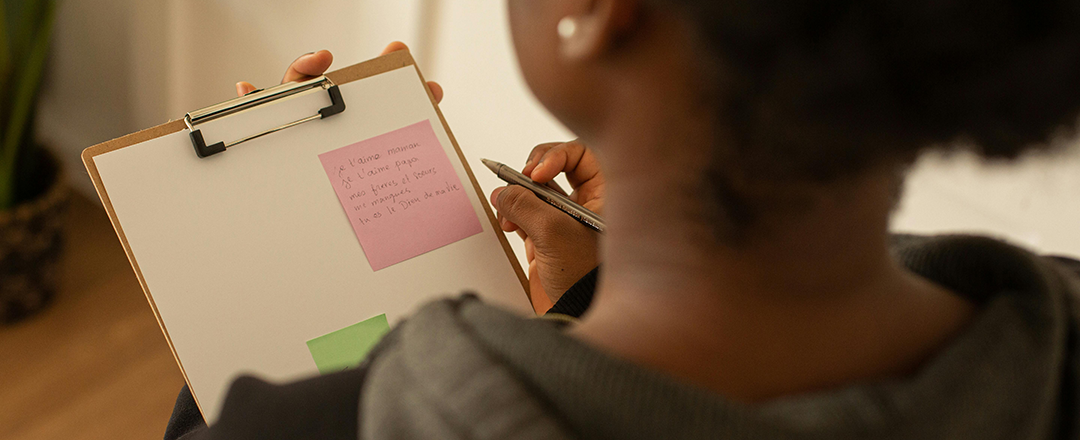
Focus is not only about removing distractions; it’s also about sustaining attention through a task that demands active processing. Handwriting typically requires you to summarize, restructure, and decide what matters. That cognitive effort supports attention and reduces the “copy-paste” mindset that often comes with fast typing.
This same mechanism has been widely observed in learning environments, where writing by hand activates deeper cognitive engagement and memory retention—an effect explored in more detail in Handwriting in EdTech: Why It Still Matters Today Whether in classrooms or meeting rooms, the principle is consistent: handwriting forces active thinking rather than passive transcription.
For deep work—problem solving, structured ideation, and action planning—writing by hand becomes a lightweight productivity tool. In other words, handwriting vs typing productivity is not just a preference debate; it’s about choosing the right mode for the outcome you want (clarity, recall, and decision quality). When the work is complex, handwriting can produce fewer notes—but better outcomes.
Hybrid meeting tools: why keyboard-first collaboration falls short
The limits of keyboard-first hybrid meetings (and what teams lose)
Hybrid work has made meetings more frequent, more distributed, and more complex. Many organizations are now living in “hybrid permanence,” where teams must assume every meeting has remote participants as well as in-room participants. That increases the need for collaboration tools that don’t privilege the people physically present or the people who type the fastest. For context on why businesses are redesigning meeting habits around this reality, read Meetings In The Modern Workplace: Welcome To 'Hybrid Permanence'. If the tools favor one group, you don’t just get worse notes—you get worse decisions.
Keyboard-first workflows can also compress nuance. Typed notes often become a linear log, while complex work needs structure: decisions, alternatives, constraints, and ownership. When teams default to typing, they may capture more text—but not necessarily more meaning. That’s why many groups are revisiting analog workflows inside modern meeting room experience design. The goal is to capture how people think, not merely what they said.
Analog-to-digital workflow: combining handwriting with cloud collaboration
The best answer is not “paper only” or “digital only,” but analog-to-digital workflow. Teams want the speed and content sharing of the cloud, plus the natural ideation and cognitive engagement of ink. Research from Microsoft on everyday analog pen use highlights real adoption patterns and the limits users feel with “digital ink” when it doesn’t match natural pen behavior: As We May Ink? Learning from Everyday Analog Pen Use to Improve Digital Ink Experiences. When digital ink feels natural, adoption stops being a change-management project and starts being a habit.
When handwriting is captured through digital capture and synced for real-time collaboration, teams can preserve the benefits of pen-and-paper while enabling distributed work. This is where digital whiteboards—and digital whiteboard alternatives—become critical: not just as screens, but as bridges between analog expression and organized, searchable project knowledge. The win is continuity: the same ink can move from a room to another one without getting lost.
Meeting equity in hybrid work: can ink make participation fairer?
Meeting equity is a design problem as much as a culture problem. If only in-room participants can see the sketch, the remote participants are second-class collaborators. Conversely, if the meeting depends entirely on a shared document that rewards fast typing, other voices may get muted. Well-designed ink experiences can help: people can draw, map, and annotate ideas quickly, while remote participants see the same content instantly. Equity improves when everyone can contribute in the most natural format, not just the fastest one.
Gensler’s work on equity in hybrid meetings connects inclusive outcomes to space and tool choices—how the room, the display, and interaction patterns support participation: EQUITY THROUGH DESIGN: HOW TO IMPROVE HYBRID MEETINGS.
Work journaling benefits: reflection, resilience, and better leadership
Why journaling at work improves clarity and self-management
Journaling is not just a wellbeing trend; it’s a work skill that supports reflection, emotional regulation, and self-efficacy. In professional life, those capabilities translate into better conflict handling, clearer prioritization, and stronger decision-making under pressure. It also supports mental clarity by externalizing thoughts—turning vague stress into structured insight. As a result, journaling increasingly shows up inside stress management routines and wellbeing at work programs, especially when teams want low-cost, self-directed habits that don’t require specialists. Put simply: journaling turns internal noise into actionable next steps.
Does journaling reduce stress? What the evidence suggests
Evidence suggests that journaling reduces psychological symptoms more effectively than no intervention at all. A 2022 meta-analysis (Monika Sohal et al.) describes journaling as a widely used non-pharmacological tool: practical, low-cost, low-risk, and self-directed. Across 20 randomized controlled trials (covering PTSD, anxiety, and depression), results show greater reductions in mental health symptom scores in journaling groups compared with controls. In the workplace, this makes journaling a cost-effective tool for building resilience, reflection, and performance—provided it is practiced consistently. Small, frequent sessions are more effective than occasional “big resets.”
Smart office design for handwriting: spaces and tools that support ink

Smart office principles that make handwriting easier (not harder)
A smart office isn’t defined by more screens; it’s defined by better outcomes with less friction. If handwriting improves recall, learning retention, and ideation, then smart office design should protect space for it: surfaces that invite sketching, zones that support quiet reflection, and meeting layouts that let ink be shared without delay. The goal is workspace transformation that improves the way people think—not just the way they connect. Designing for ink is really designing for better thinking under real-world constraints.
Connected furniture for hybrid collaboration: why it’s a practical platform
Connected furniture is emerging as a practical layer in the smart office: integrated surfaces that support content sharing without demanding complex behavior changes. Instead of asking teams to adopt another app, the workspace itself can enable analog-to-digital collaboration tools. That’s valuable for IT simplicity and adoption, because users keep familiar behaviors (writing, drawing, annotating) while the system handles capture, organization, and access. The less a tool changes behavior, the faster it becomes part of the workflow.
From insight to action: how AMI brings handwriting back into modern workspaces
Everything explored in this article points to the same conclusion: handwriting is not a nostalgic habit—it is a high-value interaction mode that modern workplaces have largely underdesigned. At AMI (Advanced Magnetic Interaction), this belief is not theoretical. It is the foundation of how we think about smart offices, hybrid collaboration, and workspace transformation.
AMI designs technologies that treat handwriting as a first-class input—not an afterthought layered onto screens. Our focus is on analog-to-digital interaction that feels natural for users while remaining simple, secure, and scalable for organizations. By enabling natural ink capture on physical surfaces and seamlessly connecting it to digital collaboration environments, AMI helps teams preserve the cognitive and emotional benefits of writing by hand while meeting the demands of hybrid work.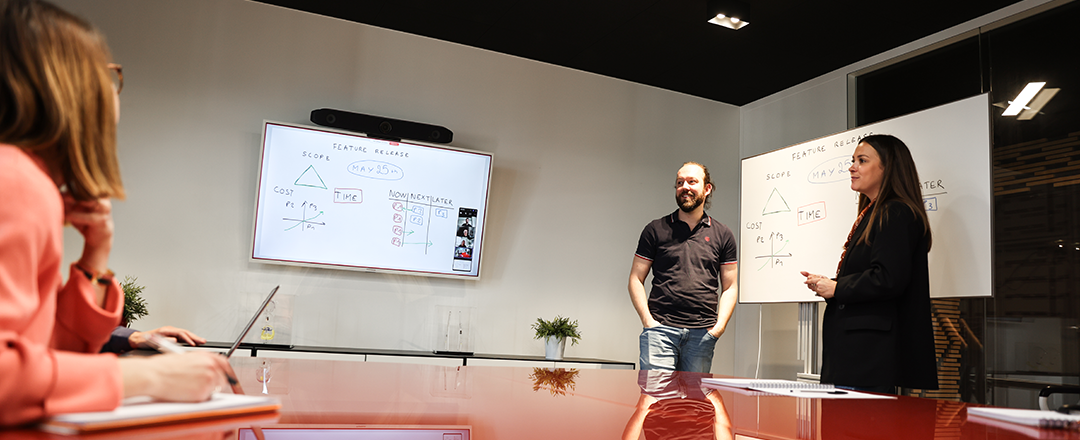
FAQ: Handwriting, hybrid meetings, and digital ink
Is handwriting better than typing for memory and learning?
Handwriting is often linked to stronger recall because it forces summarizing and active processing instead of verbatim capture. For training and onboarding, that can translate into better retention of terminology, workflows, and key concepts.
What is an analog-to-digital workflow in the workplace?
An analog-to-digital workflow lets people write naturally with pen and paper (or stylus) while the content is captured and shared digitally. It’s designed to preserve the cognitive benefits of ink while enabling cloud collaboration and searchability.
How do digital whiteboards support hybrid meeting equity?
They help when remote and in-room participants can see and contribute to the same content in real time. The key is making ink capture and sharing seamless so the room doesn’t become the “main” experience.
What should teams put on a digital whiteboard vs a document?
Use the whiteboard for thinking work: ideation maps, decision paths, risks, and alignment artifacts that benefit from visibility. Move finalized outputs into systems of record (tickets, docs, wikis) so they can be tracked and governed.
What security controls matter for cloud-based handwritten notes?
Organizations need clear access permissions, retention rules, and sharing controls—especially for guest users and cross-department work. Good governance keeps adoption high because employees can share easily without creating unmanaged data sprawl.